
Madeira North Route by Car: The Full 170 km Circuit You Can't Miss
The north route of Madeira by car is the island's most complete circuit: it starts in Funchal, follows the south coast to the western tip, and climbs through the north to São Vicente, returning via the VR2 tunnel. In about 170 km you discover cliffs, golden sand beaches, fishing villages and volcanic caves. You need a full day and to set off before 9am.
What to Expect from This Route Before You Set Off
Madeira isn't an island for impatient drivers. The northern roads are narrow, with tight bends. But that's exactly what makes this circuit so special: every kilometre has its reward.
The south route is more comfortable and faster. The north route is wilder, more authentic and far more photogenic. If you're only going to do one driving circuit during your stay in Madeira, make it this one.
What you need to know before setting off:
- ✓Total distance: approximately 170 km in a closed loop
- ✓Estimated duration: 10-12 hours with stops
- ✓Recommended departure: before 9am from Funchal
- ✓Fuel: fill up in Funchal or Ribeira Brava — petrol stations are scarce on the north coast
Stop-by-stop table: kilometres and driving times
| Stop | Km from previous stop | Driving time | Visit time |
|---|---|---|---|
| Funchal (departure) | — | — | — |
| Câmara de Lobos | 9 km | 20 min | 45-60 min |
| Cabo Girão | 7 km | 15 min | 30 min |
| Ribeira Brava | 18 km | 25 min | 45 min |
| Ponta do Sol | 10 km | 15 min | 30 min |
| Calheta | 8 km | 15 min | 45 min |
| Paul do Mar | 6 km | 15 min | 30 min |
| Ponta do Pargo | 14 km | 25 min | 45 min |
| São Vicente | 40 km | 60 min | 60-90 min |
| Funchal (arrival) | 35 km | 40 min (VR2 tunnel) | — |
The stops, one by one
Câmara de Lobos: the village Churchill painted
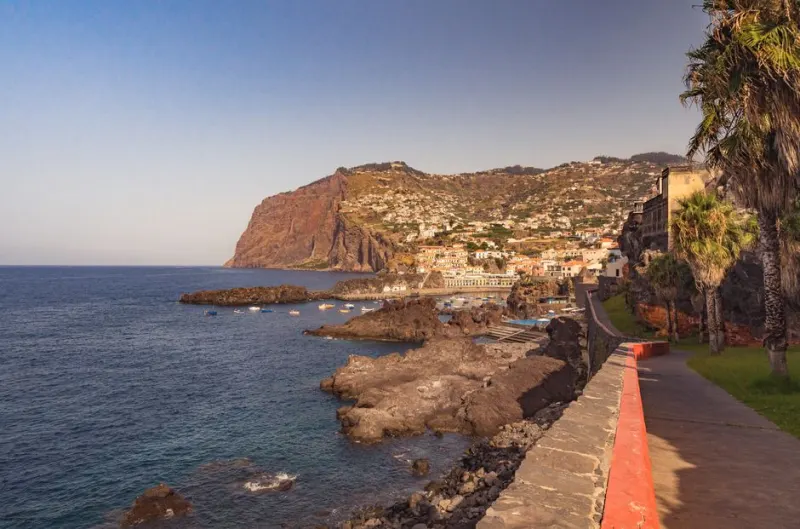
Just 9 km from Funchal, Câmara de Lobos has one of Madeira's most photographed viewpoints: brightly coloured houses, fishing boats in the harbour and the Atlantic as backdrop.
Winston Churchill visited this spot in 1950 and immortalised it in several paintings. There's a commemorative plaque at the viewpoint marking exactly where he set up his easel.
Don't leave without trying the local poncha. This traditional sugarcane spirit drink with lemon and honey is the village's welcome ritual.
Cabo Girão: Europe's highest cliff
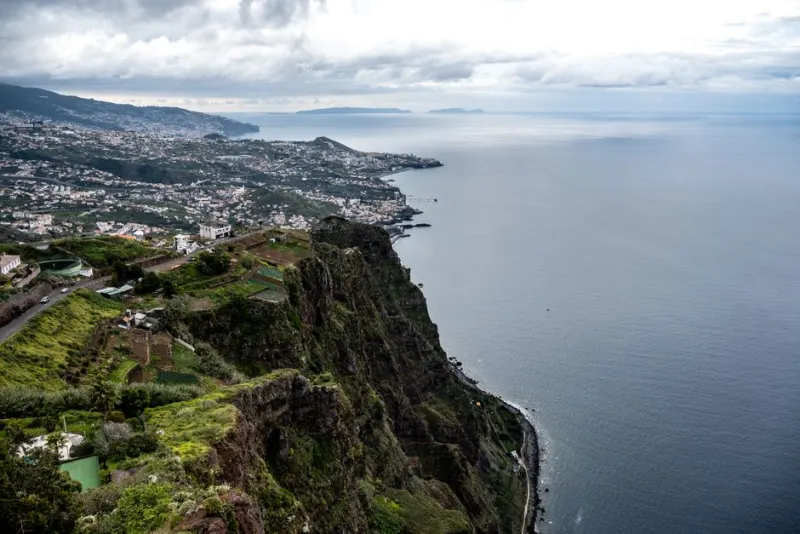
7 km from Câmara de Lobos, Cabo Girão is one of those places where your stomach tightens. With a 580-metre vertical drop to the Atlantic, it's Europe's highest sea cliff, and its glass skywalk lets you see straight down beneath your feet.
Entry is free. The car park has enough capacity if you arrive before 10am.
Ribeira Brava: the village with the textbook square
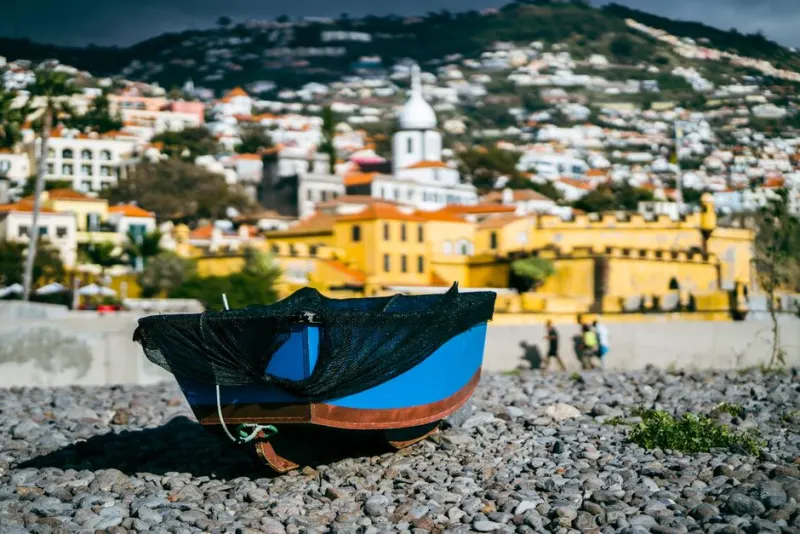
Ribeira Brava has a colonnaded square, a 15th-century church and a municipal market. On clear days it's a charming, relaxed-paced village. Worth going down to the seafront and the small 17th-century fort.
Ponta do Sol: Madeira's sunniest village
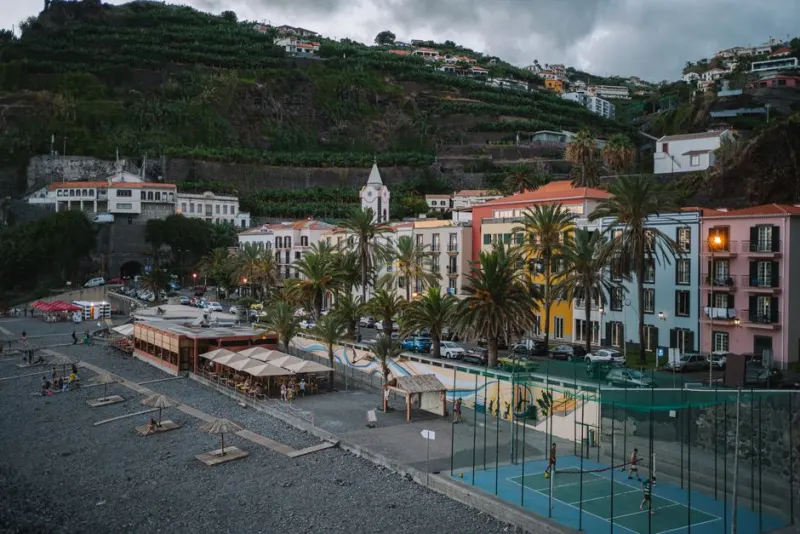
The name says it all. Ponta do Sol gets more sun hours than any other point on the island. A small medieval church, cobbled streets and a different light that photographers chase.
Calheta: the golden sand beach that isn't from Madeira
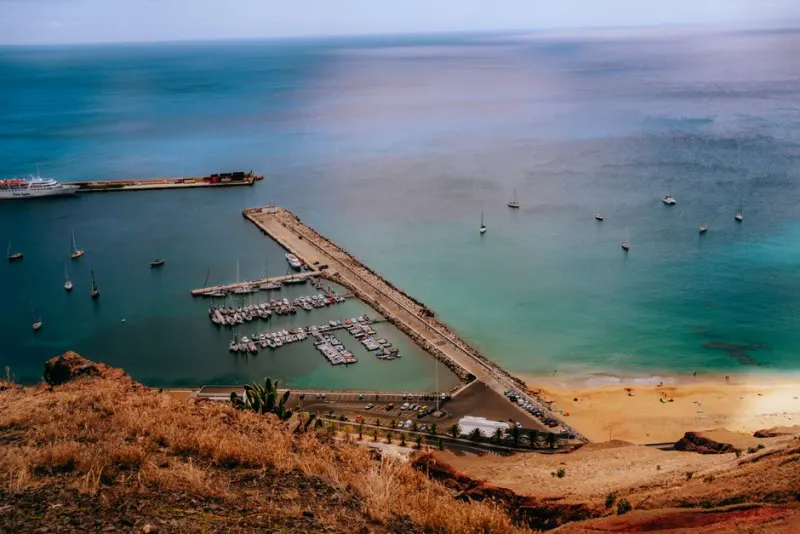
Madeira is volcanic and its coasts are black rock. Calheta's golden sand beach is an absolute rarity: sand imported from the Sahara and the Canaries creating a striking visual contrast. The marina has terrace restaurants and it's a good stop for lunch.
Paul do Mar: the end of the world over the Atlantic
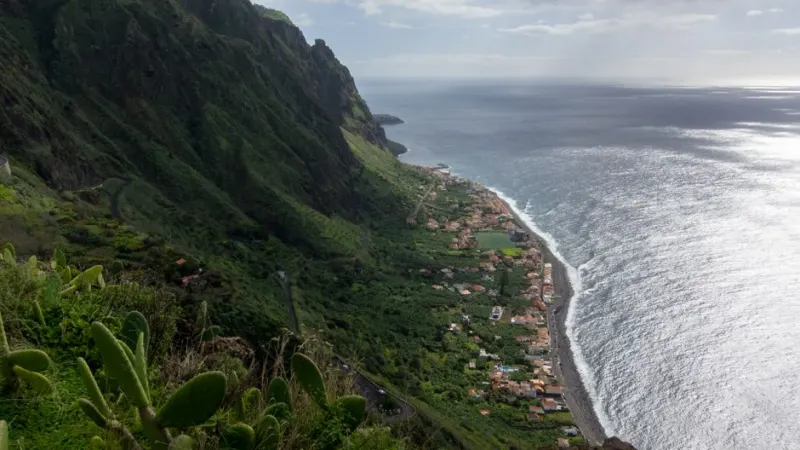
Clinging to volcanic rock, almost vertical over the Atlantic, this fishing village turned surf destination has one main street, few bars and lots of ocean. Surfers discovered it years ago: the winter waves are among the most powerful in Portugal.
Ponta do Pargo: the lighthouse at the end of the world
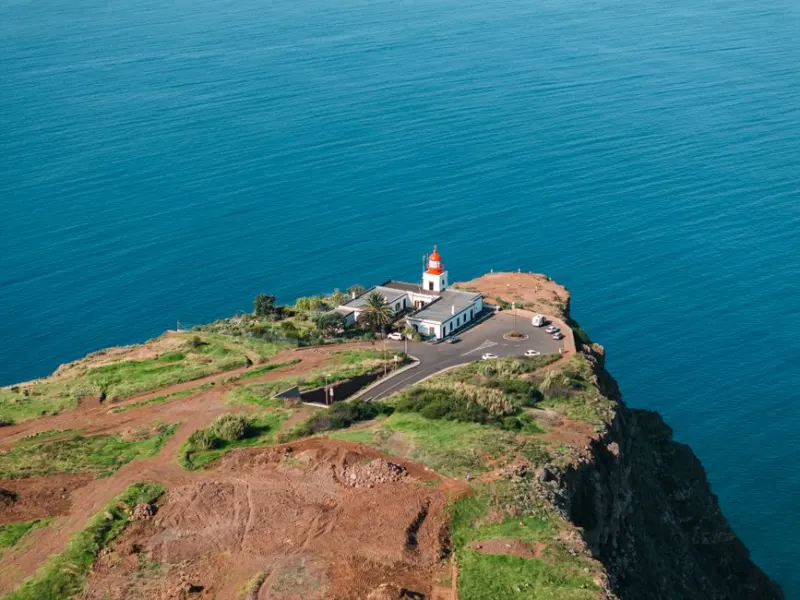
At 314 metres above sea level, the Ponta do Pargo lighthouse marks Madeira's western tip. From here there's nothing until America.
If you time it right, you can arrive at sunset. The light over the Atlantic here is of a quality photographers chase from far away. Access to the lighthouse is free and parking is free.
São Vicente: the caves the volcano created
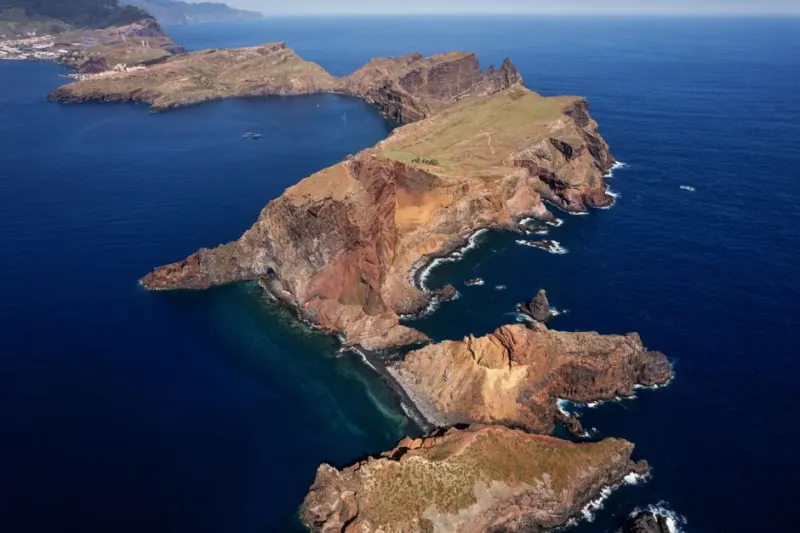
From Ponta do Pargo towards São Vicente, the road changes radically. The tarmac climbs into the interior and descends along the north coast into a completely different landscape: greener, damper, more vertical.
São Vicente is the most important point on the north coast. The must-visit is the Grutas e Centro do Vulcanismo, a system of 890-metre volcanic tunnels carved by lava 890,000 years ago. Entry costs approximately €7 per person and includes a 30-40 minute guided tour.
The return: why the VR2 tunnel is the best option
From São Vicente, the VR2 tunnel crosses the mountain directly to the São Roque area, 15 minutes from Funchal. It costs approximately €2.50 and saves an hour of night driving on mountain roads at the end of the day.
Practical tips for the north route
About the roads: The northern roads are noticeably narrower than the south coast's. Drive slowly, don't touch your phone, and if you reach a narrow point, whoever has more space behind them reverses.
About fuel: Fill up before leaving Funchal or in Ribeira Brava. Petrol stations are scarce on the north coast.
About the weather: The north can be overcast when the south is clear. Cloud on the São Vicente road is common in summer and requires reduced speed.
About the type of car: You don't need an off-roader. A compact car is enough. Avoid large vehicles if you can choose.
Frequently asked questions about Madeira's north route by car
How much time do I need for the north route by car?
You need a full day. Allow 10-12 hours if you want to stop at every point without rushing. Setting off before 9am from Funchal guarantees you reach Ponta do Pargo with daylight.
Is it hard to drive in Madeira for someone unfamiliar with the island?
It's more demanding than driving on a motorway, but not dangerous if you reduce speed. Tight bends and narrow sections require attention and patience.
Can the north route of Madeira be done by public transport?
Buses exist but have low frequency and don't reach every point on the circuit. For this route, the car is the only real option.
What's the best time of year for this circuit?
Spring (April-June) and autumn (September-October) offer the best balance between temperature, light and tourist numbers.
What car is best to rent for the north route?
A compact like a Ford Fiesta, Seat Ibiza or similar: manageable on the narrow sections and fuel-efficient. You don't need all-wheel drive or an off-roader.
This route isn't something to improvise from the airport empty-handed. You need a reliable car, a full tank and a confirmed booking before landing. Compare the best rental deals at Funchal Car Hire and head west.